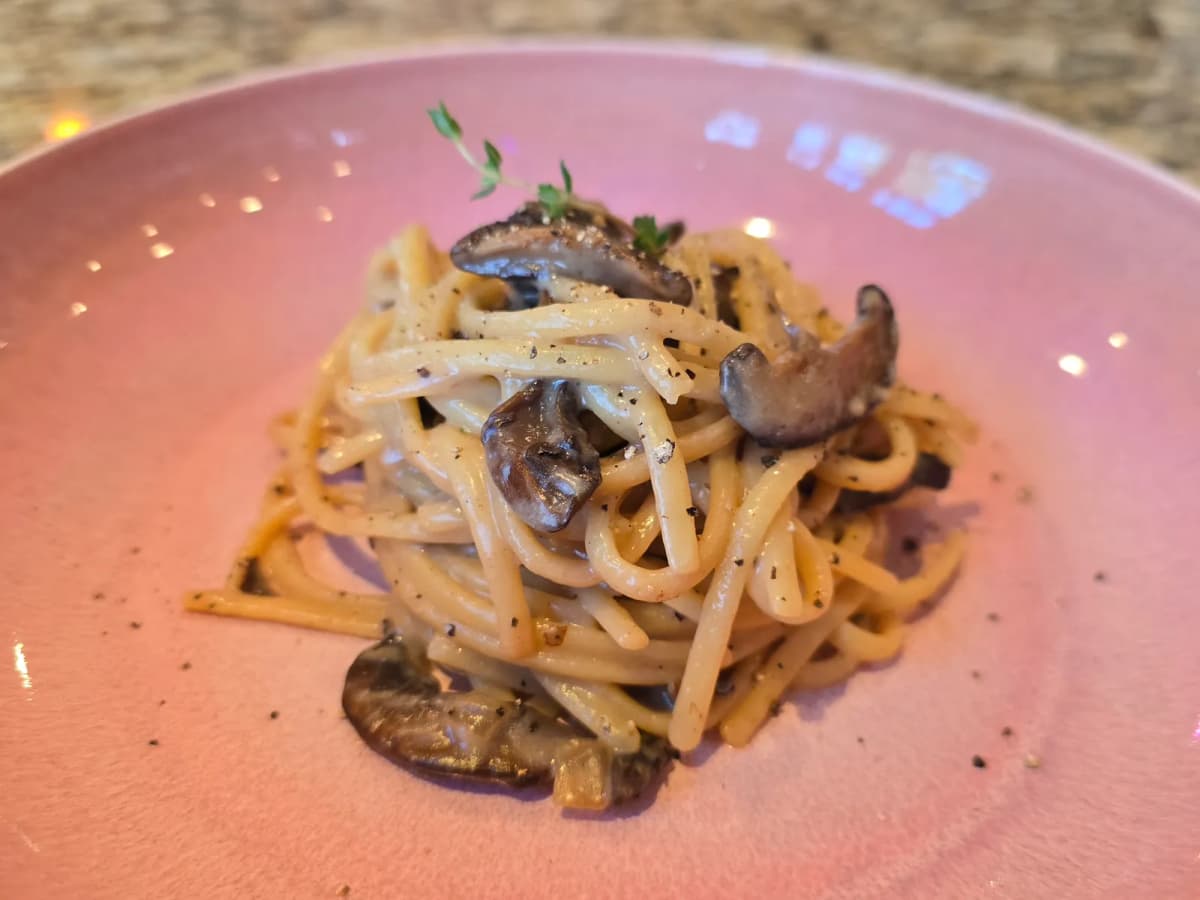
There is a specific kind of culinary nostalgia tied to the café bistros tucked inside North American bookstores from years past. The food wasn't overly complicated, but it was deeply comforting—specifically, a certain mushroom pasta that was relentlessly savory, glossy, and rich.
This recipe is a love letter to that memory, but elevated with professional technique to ensure the depth of the mushroom flavor is profound.
When you look around the internet for solutions to achieve a creamy, glossy pasta sauce, you'll often see heavy cream used as a crutch to bind everything together. While cream works, it can often mute the delicate, earthy flavors of the mushrooms. The secret to that velvet bistro texture is actually an emulsion built with starchy pasta water, Parmigiano-Reggiano, and a finishing touch of mascarpone cheese. The mascarpone melts into the sauce, providing a mellow, sweet richness that rounds out the sharp parmesan flawlessly. (If you don't have mascarpone on hand, 2 tablespoons of heavy cream will absolutely do the trick).
To protect the star of the dish, we are using a strict, multi-phase searing technique for the mushrooms and removing them from the pan before building the sauce. This ensures they maintain a deeply caramelized, meaty texture instead of steaming and turning soggy.
🍳 Needed Gear
Ingredients
- 1 oz dried porcini mushrooms
- 1 lb dried linguine, bronze-die extruded for maximum starch release
- 1 lb mixed fresh mushrooms (cremini, oyster, shiitake—stems removed, torn or thickly sliced)
- 4 tbsp unsalted butter, divided
- 2 tbsp olive oil
- 1 medium shallot, finely minced
- 2 cloves garlic, minced to a paste
- 1 tbsp fresh thyme leaves
- 1 tsp high-quality soy sauce (optional, but highly recommended for a massive umami boost)
- 1½ cups (85g) Parmigiano-Reggiano, finely grated on a microplane
- 2 tbsp (30g) mascarpone cheese (optional substitute: 2 tbsp heavy cream)
- Heavy pinches of coarse black pepper
- Kosher salt to taste
Instructions
Prep & Sear
1The Porcini Prep
Place the dried porcini mushrooms in a small bowl and cover with about 1 cup (240ml) of boiling water. Steep for 20 minutes until completely softened. Lift the mushrooms out, chop them finely, and set aside. Pour the remaining soaking liquid through a fine-mesh sieve or coffee filter to remove any grit. Reserve this filtered umami broth.
- 2
The Precise Mushroom Sear
Heat a large, wide, heavy-bottomed skillet over medium-high heat until screaming hot. Add the fresh mixed mushrooms completely dry. Do not crowd the pan; work in two batches if necessary.
Minutes 0 to 2 (The Shock): Leave the mushrooms completely undisturbed. This intense, dry heat immediately attacks the chitin cell walls, prompting them to release their moisture without dropping the pan's overall temperature.
Minutes 2 to 4 (The Purge): Once you hear a distinct squeak and see water beginning to pool in the pan, give them a light toss. Over the next two minutes, they will shrink significantly and dump the rest of their water.
Minutes 4 to 7 (The Evaporation): Continue cooking, tossing occasionally. You are waiting for every single drop of that liquid to boil away. Do not rush this step. Wait until the surface of the pan looks bone dry again.
Minutes 7 to 10 (The Maillard Fry): Now that the water is gone, add the 2 tablespoons of olive oil, 1 tablespoon (15g) of butter, the chopped porcinis, and a heavy pinch of kosher salt. Toss to coat and fry in the fat for 2 to 3 minutes until you achieve deep, golden-brown, caramelized edges.
The Hold: Using a slotted spoon, immediately remove all the mushrooms from the skillet and transfer them to a plate. Leave the residual fat in the pan.
Build the Base
3The Aromatics & Deglaze
Lower the heat to medium. In the same skillet, add the minced shallot, garlic, and fresh thyme. Sauté in the residual mushroom fat for 60 to 90 seconds until translucent and fragrant. Pour in ½ cup (120ml) of the filtered porcini broth and the 1 tsp (5ml) of soy sauce to deglaze, scraping up all the browned bits (fond) from the pan. Let this reduce until the pan is almost dry and syrupy. Turn the heat down to the lowest setting.
- 4
The Pasta
Boil the linguine in heavily salted water. Pull the pasta out 2 minutes before the box instructions say it is al dente, reserving at least 2 cups (480ml) of the starchy pasta water.
The Emulsion
5The Base Emulsion
Transfer the undercooked linguine directly into the skillet with the aromatics. Add 1 cup (240ml) of hot, starchy pasta water and the remaining 3 tablespoons (45g) of butter. Turn the heat up to medium and toss the pasta vigorously with tongs for 1 to 2 minutes. The mechanical action forces the starchy water and melting butter to bind, while the pasta finishes cooking.
- 6
The Final Cheese Emulsion & Assembly
Remove the skillet entirely from the heat. This is crucial to prevent the cheese from seizing. Sprinkle the 1½ cups (85g) of microplaned Parmigiano-Reggiano over the pasta in three separate additions. After each handful, toss the pasta furiously with your tongs. Scattering it prevents clumps, and the friction forces the cheese to melt smoothly into the butter and starch. As you build the cheese emulsion off the heat, splash in more pasta water (usually another ¼ to ½ cup / 60–120ml) until the sauce is glossy and perfectly coats the pound (450g) of linguine.
Fold in the 2 tbsp (30g) of mascarpone (or heavy cream) to round out the sauce, and add a heavy dose of cracked black pepper. If the sauce looks tight at all, add hot pasta water a tablespoon at a time, tossing until it reaches a perfectly glossy consistency. Finally, gently fold the reserved seared mushrooms back into the pasta just to warm them through, or plate the pasta and spoon the crisp mushrooms generously over the top. Season with freshly ground black pepper and more salt, if needed. Serve immediately.
📝 Ellen's Notes
Mushroom mix: Cremini, oyster, and shiitake work beautifully together. Any combination of meaty fresh mushrooms will work.
Bronze-die pasta: Bronze-die extruded pasta releases significantly more starch into the cooking water, which is what gives the emulsion its superior gloss and body. It is worth seeking out.
Mascarpone substitute: 2 tablespoons of heavy cream works perfectly if mascarpone is unavailable.
Soy sauce: Optional but highly recommended—it adds a deep umami backbone that is virtually undetectable as soy but dramatically boosts the overall savoriness of the dish.
Serve immediately: This pasta does not hold well. The emulsion will tighten as it cools. Eat it straight from the pan.
Scaling this recipe is not recommended. The emulsion technique is precisely calibrated for this exact batch size. Doubling the pasta overwhelms the pan and the emulsion will break. If you need to serve more, make two separate batches.
Questions, Comments & Compliments
FAQ
Looking for more? Explore the full collection — filter by lifestyle, cuisine, or dietary needs.