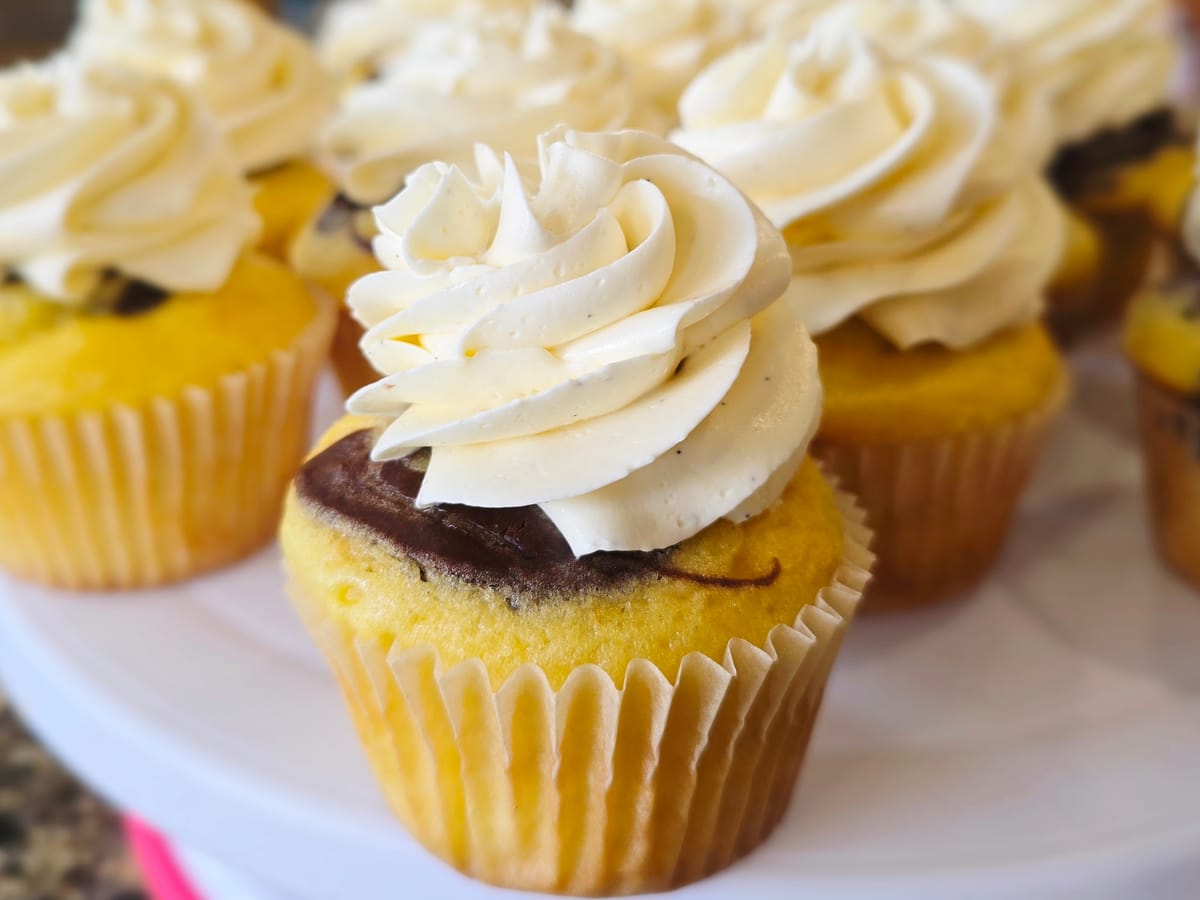
White Chocolate Swiss Meringue Buttercream: The Silkiest Frosting You'll Ever Make
This White Chocolate Swiss Meringue Buttercream is the ultimate silky, stable frosting for cakes and cupcakes. Learn how to make this bulletproof buttercream that's smooth, perfectly pipeable, and never too sweet—when made with precision and a thermometer.
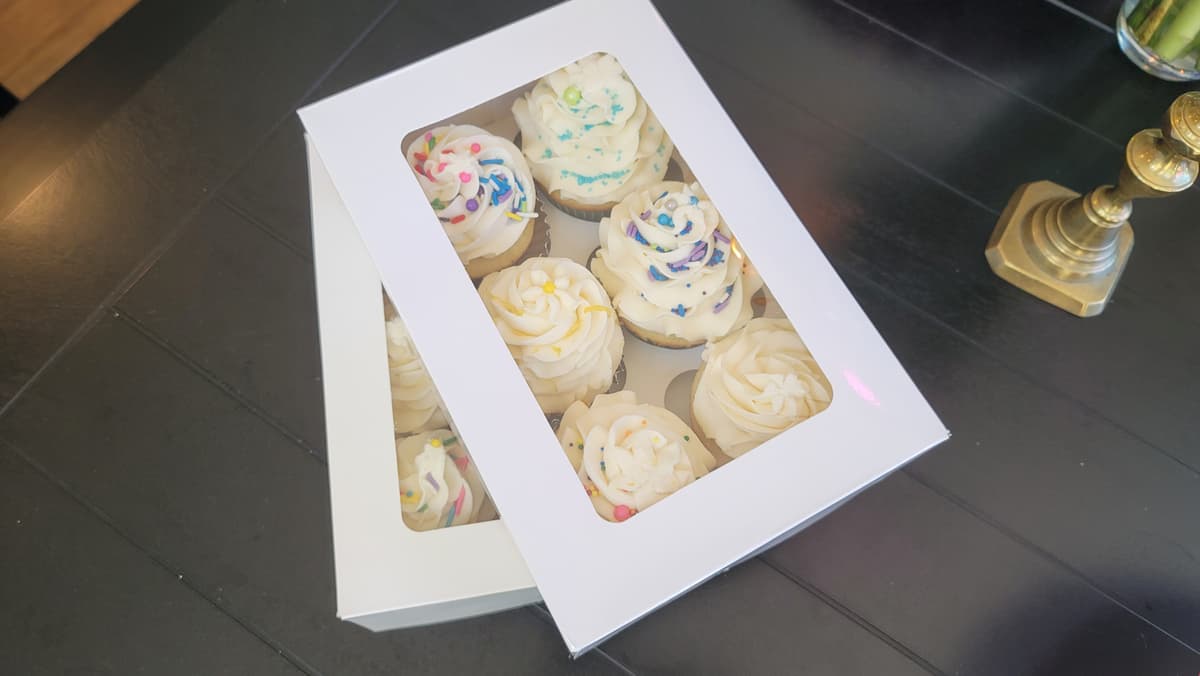
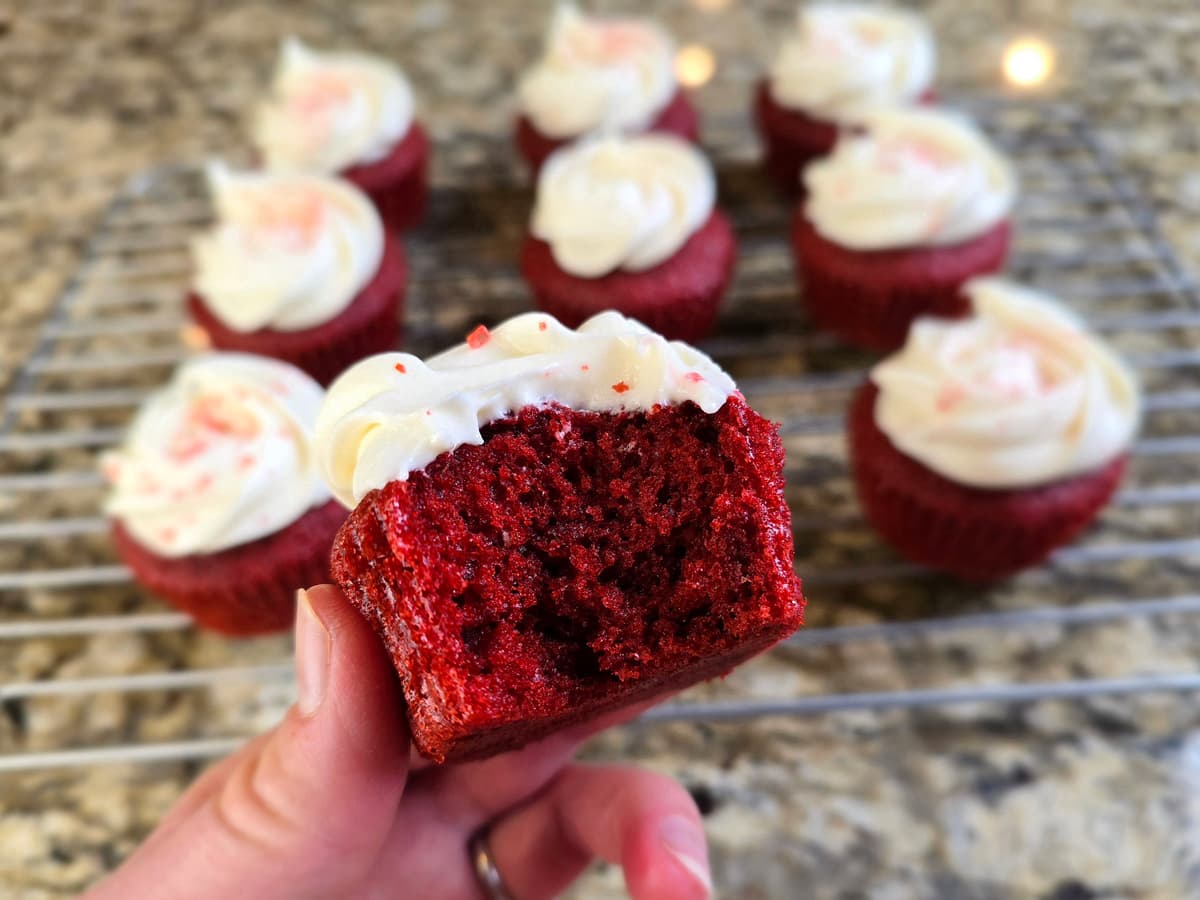
This Swiss Meringue Buttercream is one of those recipes that separates casual bakers from precision-driven ones. It's a true professional frosting—silky, refined, and less sweet than American buttercream, with a texture that melts on the tongue. It's the kind of buttercream you'd expect on a perfect bakery cupcake or wedding cake.
That said, it's not a "wing-it" recipe. This is a technical buttercream that relies entirely on temperature control. Without a thermometer, the chances of success are slim. The steps look simple, but every one of them depends on precision. If you skip the tempering or rush the cooling, the emulsion will break. But master these fundamentals, and you'll have a frosting worthy of your finest creations.
Note: Total hands-on time varies depending on kitchen temperature and conditions. Heating takes 6–10 minutes, whipping 8–20 minutes, and cooling can add another 15–30 minutes if needed. On cooler days or with a warm meringue, you might need extra chilling time between steps. Total time can range from 40–80 minutes depending on conditions.
Ingredients
- 5 large egg whites (150 g)
- 1 1/2 to 1 2/3 cups (300 to 330 g) granulated sugar (or toasted sugar for more caramel depth) — use 300 g for classic balance, up to 330 g for a touch more sweetness
- Heaping 1/4 teaspoon fine sea salt
- 2 cups (450 g) unsalted butter, cool and pliable (18-20 °C / 65-68 °F), not shiny or soft
- 1 teaspoon pure vanilla extract + 1/2 scraped vanilla bean —or 2 teaspoons vanilla paste for depth
- Optional: 1 1/2 to 2 oz (40-60 g) white chocolate, melted and cooled to 28-30 °C (82-86 °F); adds gloss and slight sweetness
Instructions
- 1
Heat, dissolve, and pasteurize the egg whites. Combine egg whites, sugar, and salt in the mixer bowl. Place the bowl over barely simmering water (bowl bottom not touching). Whisk gently but constantly — you're keeping the mixture moving, not whipping air in. Heat until the temperature reaches 74–78 °C (165–172 °F) and the mixture feels completely smooth when rubbed between your fingers (no grit). This typically takes 6–10 minutes, but can vary depending on heat intensity, bowl thickness, and kitchen temperature. Do not proceed until the sugar is fully dissolved. Even if you reach 165 °F, if it still feels gritty, keep whisking until smooth.
- 2
Whip the meringue to cool, stiff peaks. Move the bowl to the mixer fitted with a whisk attachment. Beat on medium-high speed (6–8) until stiff, glossy peaks form and the bowl feels neutral or slightly cool to touch (about 24–28 °C / 75–82 °F). Typical time is 8–20 minutes, depending on conditions. If you overheated your eggs closer to 170 °F or have a warm kitchen, expect this cooling to take 30–60 minutes total (mixing plus intermittent chilling). That's normal. If the meringue won't drop below 30 °C, try these cooling hacks: stop the mixer for a few minutes to release trapped heat, rest the bowl on frozen peas, ice packs, or a bag of frozen corn for 2–5 minutes, rotating the bowl occasionally. Never over-chill; you want evenly cool, not cold edges. If the meringue feels only faintly warm but reads 30 °C, you can proceed — thermometers often read high in foams.
- 3
Add the butter to emulsify. Ensure the butter is 18–20 °C (65–68 °F) — soft but not glossy. Switch the mixer to medium speed (4–5). Add butter one cube every 10 seconds, allowing each to blend before adding the next. The mixture may appear soupy (if the meringue is warm) or curdled (if the meringue is cool) — both are normal. Keep beating; it will come together. Once all the butter is in, mix for 2–3 minutes more until smooth. If it stays soupy, refrigerate for 5 minutes, then beat again. If it looks curdled, warm the bowl sides with your hands or a warm towel for 5–10 seconds, then beat again.
- 4
Flavour and finish the buttercream. Add vanilla (and melted white chocolate if using, at 28–30 °C / 82–86 °F). Beat on medium until incorporated. Switch to the paddle attachment and run on low for 30–60 seconds to knock out air bubbles. Enjoy!
FAQ
Did you try this recipe?
Leave a star rating — it helps other cooks find it!
Comments



Looking for more? Explore the full collection — filter by lifestyle, cuisine, or dietary needs.