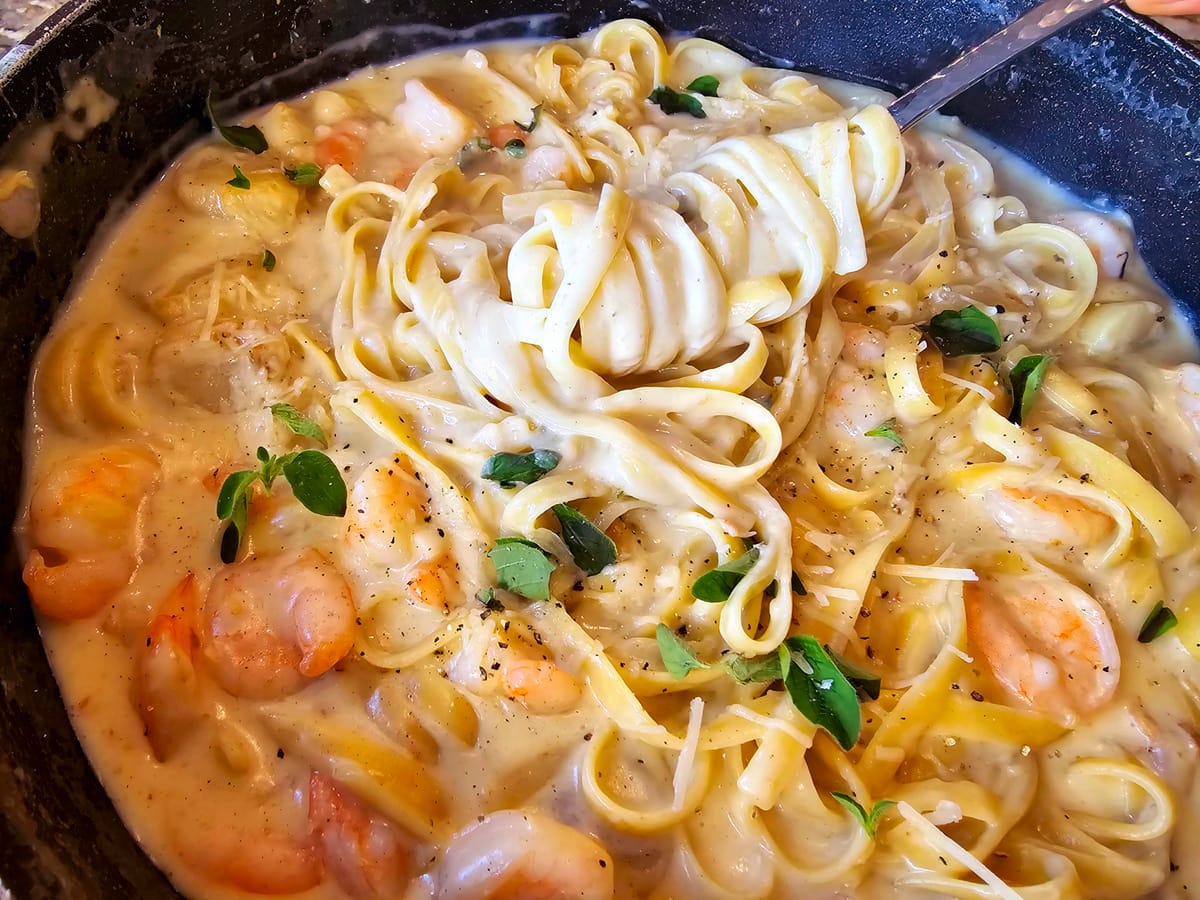
Zero Cream Seafood Fettuccine Alfredo – Olive Garden Fettuccine Alfredo Copycat
Ever crave that rich, dreamy fettuccine Alfredo, but feel a bit hesitant when you see the amount of cream in traditional recipes? I know the feeling! For years, I just couldn't bring myself to use cups and cups of heavy cream for one dish—no matter how delicious. It always felt a little irresponsible, health-wise. So, I thought, why not take all that worry out and still keep the flavours we love? And guess what? This fettuccine Alfredo is the answer! Here's the secret: no cream. Yes, you heard that right! Instead of relying on heavy cream, we're using a simple roux and milk, mixed with fresh Parmesan cheese. This creates the same silky, luxurious sauce you know and love, without all the heaviness.
Ever crave that rich, dreamy fettuccine Alfredo, but feel a bit hesitant when you see the amount of cream in traditional recipes? I know the feeling! For years, I just couldn't bring myself to use cups and cups of heavy cream for one dish—no matter how delicious. It always felt a little irresponsible, health-wise. So, I thought, why not take all that worry out and still keep the flavours we love? And guess what? This fettuccine Alfredo is the answer!
Here's the secret: no cream. Yes, you heard that right! Instead of relying on heavy cream, we're using a simple roux and milk, mixed with fresh Parmesan cheese. This creates the same silky, luxurious sauce you know and love, without all the heaviness.
Ingredients
- 4 TBSP butter
- 1/3 cup flour
- 5 cups milk
- 2 bouillon cubes or 2 tsp stock powder; if you absolutely dislike the idea of using this, just increase Parmesan by 1/2 cup; you may also need more salt
- 1 cup Parmesan cheese, grated
- 1/2 tsp black pepper
- salt, to taste
- 1/4 tsp nutmeg
- 1 tsp garlic powder
- 1 lb dried fettuccine pasta
- 1 TBSP olive oil
- 1–2 lbs fresh seafood such as medium-large shrimp and large scallops
- 6 garlic cloves, minced
Instructions
- 1
Heat the oil over medium-high heat. Add the seafood in a single layer and cook undisturbed for about 2 minutes per side. The cooking time will need to be adjusted based on the size of your seafood. For example, thawed small scallops could be much more economical. Due to their small size, precooking them in step 4 is virtually unnecessary and you can add them then. But larger seafood needs precooking, plus that will make it benefit from delicious browning thanks to the Maillard reaction that happens during the frying process. Try to cook your seafood about 80% of the way through. Once you are near that mark, add the garlic and cook it for 30 seconds until fragrant. Scrape everything onto a separate plate and set aside.
- 2
Meanwhile, boil the fettuccine in a pot of salted water according to package instructions until al dente. However, reduce the cooking time by about a minute or even two; this will ensure your noodles don't get overcooked. You will finish cooking your noodles in the sauce, allowing them to absorb some of those flavours. Once the noodles are just shy of al dente, drain them and reserve at least 1.5 cups (360 ml) of pasta cooking water.
- 3
In the meantime, melt the butter over medium heat. Stir in the flour and cook it for a minute, forming a paste. Add your bouillon cubes and quickly break them down with a wooden spoon. Slowly pour in 1 cup (240 ml) of milk—pour it over a period of about 1 minute while stirring aggressively. If you skip that step and add too much milk at once, the floury lumps will never come out. As such, you have to keep adding milk bit by bit until you form a smooth paste. NOTE: I highly recommend taking an additional step of passing this through a fine mesh sieve to catch and remove any flour lumps that might be there! Simply strain it and return it to the pan. Let the mixture simmer over medium heat for about 4 minutes, constantly stirring with a wooden spoon to prevent scorching. Assess your sauce—it needs to be creamy and thick. If it's too runny when you add the pasta to it, the whole dish will end up overcooked. So make sure it's thick enough that you can draw a line with a finger across the back of a spoon. Add the nutmeg, garlic powder, and black pepper.
- 4
At this point, add your seafood and cook it for a minute or so if you parcooked it in step 1. If not, you may need to cook it a bit longer until it reaches a safe internal temperature. But be sure not to overcook. At the same time you add the seafood, add your reserved pasta. Realistically, you will only need a minute or two of simmering time. When the pasta is cooked to your liking and your seafood is heated through and cooked through, stir in the Parmesan and remove from the heat. Taste and season with more salt and pepper as needed. Enjoy!
FAQ
Did you try this recipe?
Leave a star rating — it helps other cooks find it!
Comments
Looking for more? Explore the full collection — filter by lifestyle, cuisine, or dietary needs.