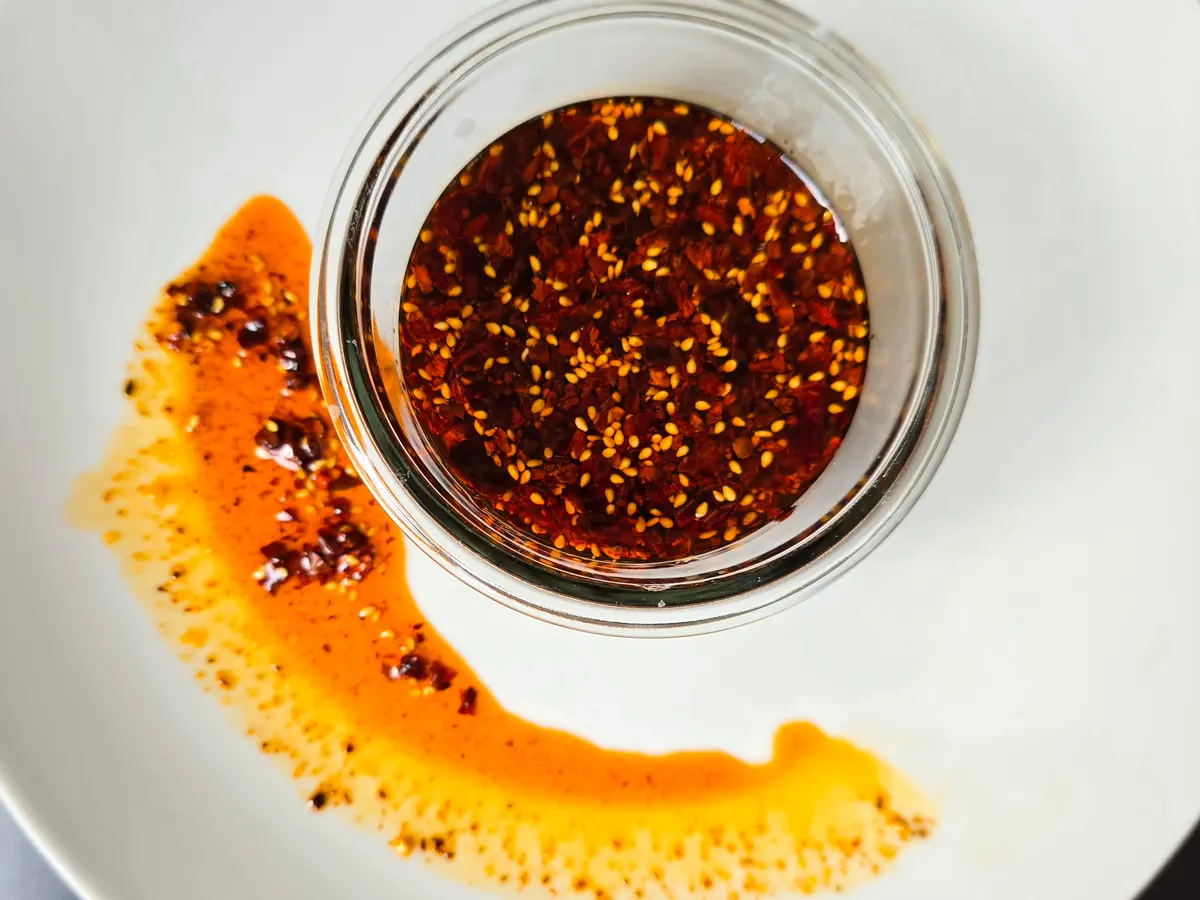
Sichuan-Style Hot and Numbing Chili Oil (红油辣子)
If there's one condiment that never goes out of style in my kitchen, it's this: hot and numbing Sichuan chili oil. Fiery, aromatic, and addictive, this 红油辣子 is the kind of small-batch kitchen magic th
Ingredients
- 60–70 g whole dried Sichuan chilies (about 2 cups) – stems removed, seeds mostly discarded
- 1.5 tablespoons (9 g) Sichuan peppercorns – red variety preferred, divided (1.5 tablespoons for grinding, 3/4 teaspoon reserved for final addition)
- 1½ cups (360 ml) neutral oil – peanut, canola, rice bran, or grapeseed
- 1 medium shallot – roughly chopped
- 4 garlic cloves – smashed
- ½-inch knob of ginger – sliced
- 1 whole cinnamon stick
- 2 star anise
- 2 bay leaves
- 2 teaspoons (6 g) fennel seeds
- 1 black cardamom pod – optional
- 1–2 teaspoons (3–6 g) ground Sichuan or Korean chili flakes
- 1.5 tablespoons (20 g) white sesame seeds
- 3/4 teaspoon (4 g) kosher salt
Instructions
Chili Flake Blend
1Blend the chilies and all but ¾ tsp (4ml) of the Sichuan peppercorns in a spice grinder or food processor until coarse (like gochugaru texture). Set aside.
Infused Oil
2In a saucepan or small wok, add the oil, shallot, garlic, ginger, cinnamon, star anise, fennel, bay leaves, black cardamom, and ¾ tsp (4ml) Sichuan peppercorns. Heat gently over low to medium-low until the oil reaches 200–230°F (93–110°C). Let steep for 25–30 minutes, adjusting the heat to keep it in this range. The aromatics should slowly brown and become deeply fragrant — not fried or burned.
- 3
Once the aromatics are golden, carefully remove and discard the solids using a strainer or slotted spoon. Return the oil to the pot, increase the heat slightly (but keep it under 230°F/110°C), then add the ground chili and peppercorn blend that we prepared in Step 1. Stir and let cook in the oil for about 5 minutes, stirring occasionally, until deeply red and aromatic. The mixture will gently bubble — that's expected.
Final Chili Oil
4Remove from heat and immediately stir in the ground chili flakes (or Sichuan powder), sesame seeds, and kosher salt. Stir well and let cool completely. Transfer to a clean, dry jar. Refrigerate for longer shelf life.
- 5
A Few Notes Before You Start
- Use whole dried chilies and grind them yourself. Pre-ground chili powder loses aromatic oils and won't give you that fresh, vibrant depth. Whole chilies are more forgiving and flavourful. - Keep your oil below 230°F (110°C). This is crucial. Too hot and you'll burn the aromatics, making the oil bitter. Too cool and you won't extract enough flavour. A reliable thermometer is your best friend here. - Don't skip the sesame seeds and salt. They're not just garnish—sesame adds nutty richness that balances the heat, and salt brightens and grounds all the spices. Together, they make this condiment taste complete.
- 6
Adjusting Heat
If you'd like a spicier chili oil, you can substitute or blend in hotter dried chilies. Start by replacing 10–15 g of the Sichuan chilies with varieties like chiles de árbol, Thai bird's eye, or ancho peppers. Taste and adjust in small increments. Remember that Sichuan peppercorns provide the numbing quality—the additional heat comes from the chilies themselves—so balance both for the flavour profile you're after.
FAQ
Did you try this recipe?
Leave a star rating — it helps other cooks find it!
Comments
Looking for more? Explore the full collection — filter by lifestyle, cuisine, or dietary needs.