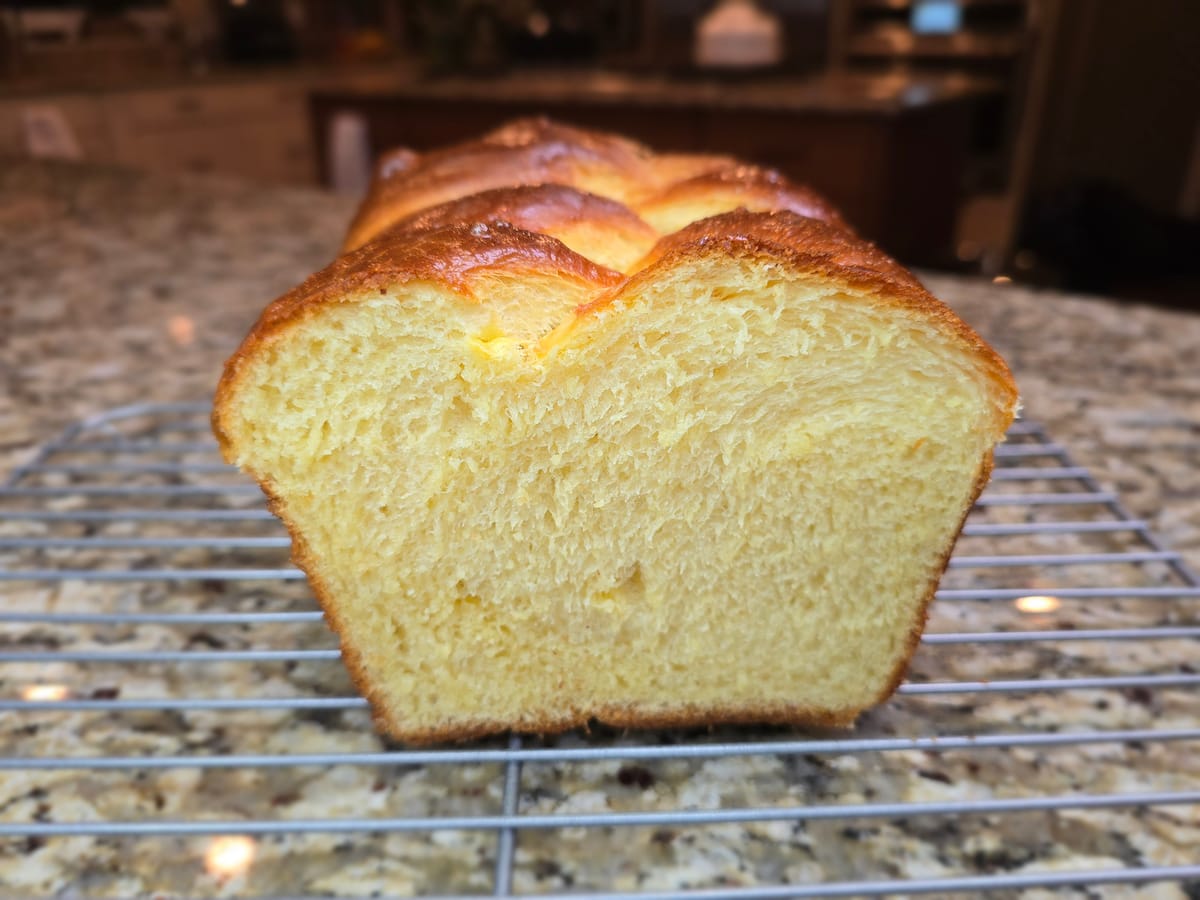
The Best Brioche: A Perfect Balance of Precision and Practicality
Brioche is often described as “a cake disguised as bread”, a luxurious balance of buttery richness and feathery softness. It straddles the line between pastry and bread, and when done right, it's utte
Ingredients
- 2 oz (60 ml) milk, about 1/4 cup (110°F/43°C)
- 10g instant yeast, about 3 tsp (1 TBSP)
- 2 oz bread flour, about 1/3 cup + 2 TBSP (55g), gently spooned into the cup measure and leveled; never just scooped out of the bag
- 3 large eggs, at room temperature
- 8 oz bread flour, about 1½ cups plus 2 TBSP (225g), gently spooned into the cup measure and leveled; never just scooped out of the bag
- 1/4 cup (50g) granulated sugar
- 1/2 heaping tsp kosher salt
- 11 TBSP unsalted butter, about 5.5 oz (156g), softened but not melted, cut into cubes
- 1 large egg
- 1 TBSP (15 ml) heavy cream
Instructions
- 1
Make the sponge: Warm the milk to 110°F (43°C) using a microwave or stovetop. The milk should feel warm to the touch but not hot. In a small bowl, combine the warm milk, yeast, and bread flour. Stir just until no dry flour remains. Cover the bowl with plastic wrap or a towel and let it rest in a warm spot (about 75°F/24°C) for 30 minutes, or until it has doubled in size and looks bubbly.
- 2
Prepare the dough: Attach the paddle attachment to your stand mixer. Add the sponge to the bowl. Turn the mixer to low speed and add the eggs one at a time, allowing each to mix in before adding the next. With the mixer still on low, add the bread flour, then the sugar, followed by the salt. Let the mixer run for 5 minutes to begin developing gluten. With the mixer running on low, add one cube of softened butter at a time, waiting until each piece is fully absorbed before adding the next. Note: The dough will be very sticky at this stage—this is normal. Once all the butter is incorporated, remove the paddle and switch to the dough hook. Mix on medium speed for about 15 minutes, or until the dough pulls away from the sides of the bowl. The dough should be soft, slightly sticky, and able to pass the "windowpane test" (when stretched, it forms a thin translucent membrane without tearing). Using a bowl scraper or oiled hands, gently fold the edges of the dough toward the centre to form a smooth, round shape.
- 3
First rise and cold proof: Transfer the dough to a buttered bowl, seam side down. Cover with a towel and let it rest in a warm place (about 75°F/24°C) for 60 minutes, or until noticeably puffy. After 60 minutes, cover the bowl tightly with plastic wrap and place it in the refrigerator. Chill for at least 2 hours, but preferably overnight (8–12 hours, up to 48 hours). Note: Chilling the dough makes it easier to handle and enhances the flavour.
- 4
Shaping and final proof: Remove the dough from the refrigerator and turn it out onto a lightly floured surface. I usually turn it onto parchment paper that is very lightly floured. Weigh the dough to ensure even pieces for an even braid. Roll each piece into a long strand about 1 ½ times the length of your bread pan. If the dough resists stretching, let it rest for 5 minutes, then try again. Lay the three strands side by side. Braid them together, pinching the ends to seal. Tuck the ends underneath for a neater appearance. Line a 5" × 9" (13 × 23 cm) non-stick bread pan with parchment paper, letting the sides of parchment overhang so you can later pull your bread out with ease. Place the braided dough inside. Cover loosely with plastic wrap and let the dough proof at 75–90°F (24–32°C) for 60–90 minutes, or until almost doubled. Test for readiness: Gently press a finger into the dough—if the indentation slowly springs back halfway, it's ready. If it bounces back immediately, let it rise longer. The dough will be quite noticeably puffed when it's ready.
- 5
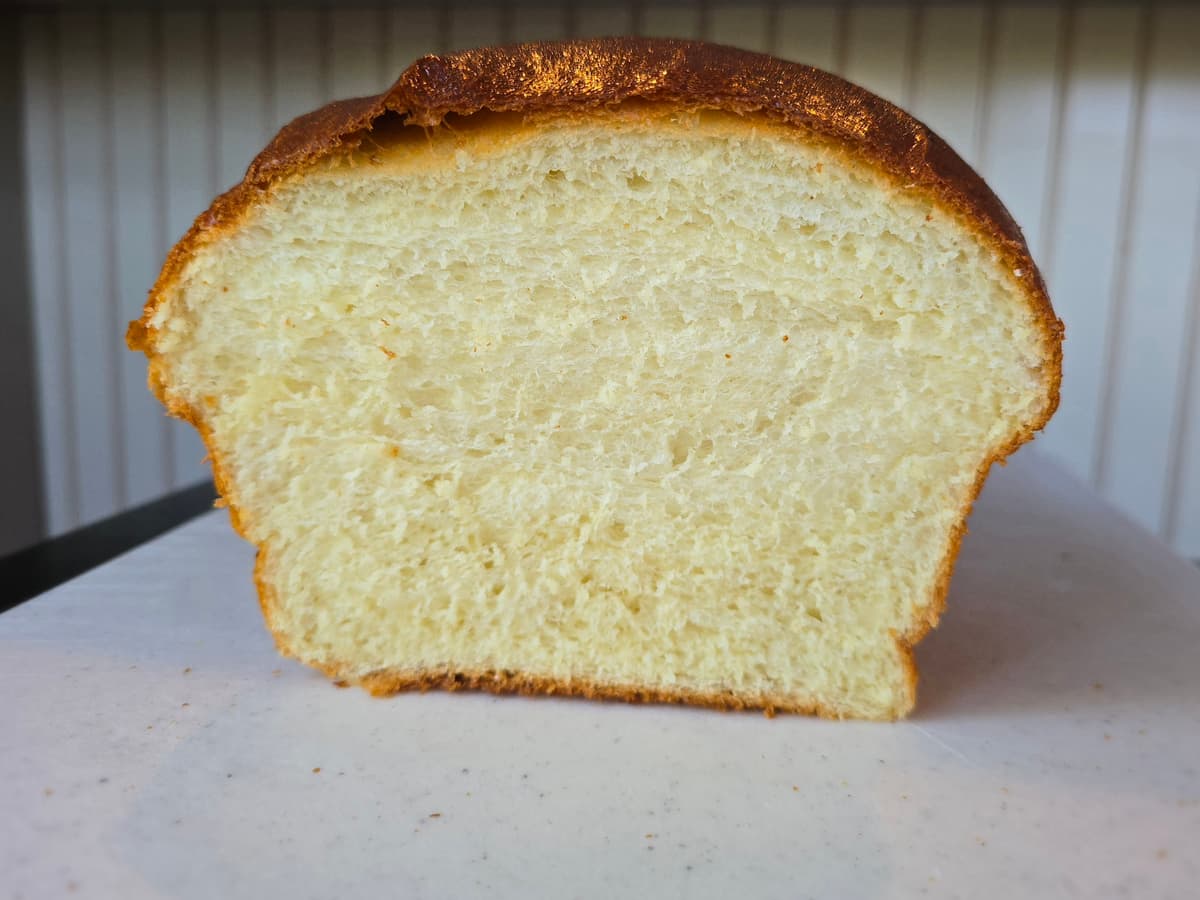
Baking: Preheat the oven to 356°F (180°C). Position an oven rack in the lower half to prevent excessive browning. Whisk together 1 egg and 1 tbsp (15 ml) heavy cream for the egg wash. Using a pastry brush, gently coat the surface of the dough with the egg wash. This gives the brioche its signature deep golden, glossy crust. Bake for 23–30 minutes, checking the internal temperature at 23 minutes. The brioche is done when it reaches 188–190°F (86–88°C) internally, when tested in the middle of the bread with an instant-read thermometer. It's best to aim for an internal temperature of 190°F (88°C), as that typically indicates the brioche is fully baked and set. However, if you're concerned about dryness and want a softer texture, you could pull it out just slightly below—around 188–190°F (86–88°C)—but no lower. This will help ensure it's baked through without losing too much moisture. If it's under 185°F (85°C), the inside may still be underdone, so don't go too low. If you end up pulling the bread at less than 190°F (88°C), just be sure that it's set enough so the centre isn't raw or underbaked. Whatever you do, do not go over 195°F (90°C), or it will lose its softness. Carefully remove the bread from the pan and transfer it to a cooling rack. Allow it to cool for at least 5–7 minutes before slicing for the best texture.
FAQ
Did you try this recipe?
Leave a star rating — it helps other cooks find it!
Comments

Looking for more? Explore the full collection — filter by lifestyle, cuisine, or dietary needs.